

WASHINGTON —
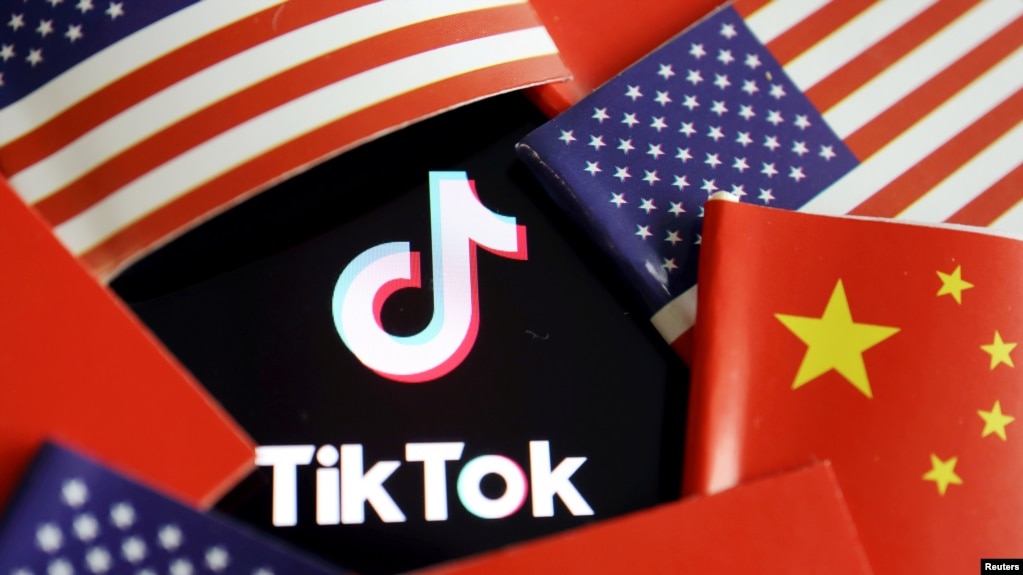
The mid-term elections in the United States have just ended, and Republican members of Congress announced on Thursday that they will introduce a bill to completely ban TikTok, the overseas version of the Chinese social media platform Douyin, from operating in the United States. As the Republican Party is expected to occupy a majority of seats in the next House of Representatives, coupled with the re-election of many lawmakers who hold a tough attitude on China issues, some analysts believe that TikTok’s data privacy, addiction algorithms and national security threats will be subject to the U.S. Congress With more supervision, it is not impossible for this social media program described as "opium" and "spyware" to be blocked in the United States.
A "potential spyware"
Republican Senator Marco Rubio (Marco Rubio) and Republican Representative Mike Gallagher (Mike Gallagher) wrote an article in the "Washington Post" on November 10, announcing the introduction of legislation to ban TikTok The social media app from Beijing-based ByteDance "operates in the U.S. with other social media companies effectively controlled by the CCP."
Two lawmakers called TikTok a "potential spyware" in the article titled "TikTok, time is up. This app should be banned in the US."
The article said: "TikTok is already one of the most popular media companies in the United States. It provides the Chinese Communist Party with the unique ability to monitor more than 1 billion users around the world, including nearly two-thirds of American teenagers. We must fight for Stop this potential spyware before it's too late..."
Rubio and Gallagher, who just won re-election in the midterm elections, said that unless TikTok and its algorithms can be separated from the Chinese government, the app's use in the United States will continue to endanger the country's national security.
Charles Flint, former chief of staff to U.S. Republican Sen. Marsha Blackburn (R-TN) and chairman of the consulting firm Flint Consulting, told VOA via email: “ An outright ban is possible if congressional oversight is bipartisan and creates social awareness."
U.S. Senator Marco Rubio (R-FL) questions U.S. Secretary of State Antony Blinken during a Senate Foreign Relations Committee hearing (file photo, Sept. 14, 2021).
U.S. Senator Marco Rubio (R-FL) questions U.S. Secretary of State Antony Blinken during a Senate Foreign Relations Committee hearing (file photo, Sept. 14, 2021).
Reuters reported in April that TikTok was expected to generate $6 billion in advertising revenue for U.S. businesses this year. "So we can't expect companies to take the lead," Flint said.
The Congressional "Special Committee on China" wants to use TikTok
As of November 10, vote counts for the 2022 midterm elections in the U.S. Congress show that the Republican Party is expected to surpass the Democratic Party and win a majority of seats in the House of Representatives. The result of the Senate election is still unclear, with incomplete vote counts in several key states not yet showing which party will dominate the Senate.
However, Republicans in the House of Representatives have said that if they become the majority party in Congress, they will establish an ad hoc committee on China to deal with various challenges from China. Republicans have said investigating TikTok's data privacy practices will be a priority.
House Energy and Commerce Committee Republican leader Cathy McMorris Rodgers (Cathy McMorris Rodgers) told the US political news website Politico in October this year when talking about the focus of the next House of Representatives on China issues: "We have been Investigate how the Chinese Communist Party is stealing our data and harvesting data on vast numbers of Americans. TikTok will be high on the list."
Former Senate chief of staff Flint said: "Republicans will increase the pressure on TikTok through relevant committees, subpoena (TikTok) company executives and records."
A series of reports in the U.S. media this year have revealed that engineers based in China routinely access the data of U.S. TikTok users, and that TikTok also plans to monitor the location of specific U.S. citizens. Flint said the revelations did not match TikTok's previous statements to Congress, setting the stage for lawmakers to investigate the company.
There are signs that Democratic lawmakers may be open to investigating TikTok, reaching a consensus with Republicans.
Democratic Senator Chris Murphy of Connecticut recently called out TikTok while criticizing U.S. social media platform Twitter for accepting investment from Saudi Arabia. He tweeted on Oct. 31 that it was a "dangerous trend we don't necessarily want to accept."
The "National Review" (National Review) magazine subsequently reported that Murphy's Senate aides did not rule out the possibility of supporting the ban on TikTok, and emphasized his previous warnings about TikTok's relationship with China. "Senator Murphy believes that growing control of major social media platforms by foreign governments is a national security issue that the United States should take more seriously -- from Saudi Arabia's stake in Twitter," the aide said. Go to China and participate in TikTok.”
Another heavyweight Democratic senator, Mark Warner (Mark Warner), chairman of the Senate Intelligence Committee, is also a long-time critic of TikTok. He even said that former President Donald Trump's decision to ban TikTok in 2022 during his term was "correct."
The issue of minors' privacy protection bears the brunt
In addition to the national security concerns that TikTok may share U.S. user data with Beijing, criticisms of TikTok from all walks of life in the United States involve other levels: excessive collection of information without users’ knowledge, algorithms that make teenagers addicted, and push inappropriate content It has also been widely criticized for harming young users and cooperating with Beijing to censor content.
“The CCP could also use TikTok to promote videos of politicians who support the party or exacerbate discord in American society,” Rubio and Gallagher noted in the Washington Post article.
Tech activist Tristan Harris, an expert on the ethics of social media design, has described TokTok as "opium . " He recently pointed out in an interview aired on CBS's "60 Minutes" program that Douyin has certain restrictions on the usage time and browsing content of users aged 14 and under in China, while TikTok's push algorithm can be "unscrupulous" in the United States. , It seems to be deliberately causing teenagers to become addicted to TikTok.
According to market research data , 63% of American teenagers (12 to 17 years old) use TikTok every week; Facebook’s Instagram accounts for 57% of users who reach this frequency of use among teenagers; Snapchat is 54%.
Statistics from Google this year show that nearly 40% of American teenagers have used TikTok as a tool to search for information instead of using traditional search engines like Google.
The Biden administration in the United States has stated that it will assess the risks of TikTok in a "decisive and effective manner" and will launch a security review in June 2021; , the United States needs to formulate a new strategy; the Committee on Foreign Investment in the United States (CFIUS) is also negotiating with TikTok on data security issues.
The booth of TikTok's parent company "ByteDance" at the Exhibition Center of Zhongguancun National Independent Innovation Demonstration Zone in Beijing. (February 10, 2022)
The booth of TikTok's parent company "ByteDance" at the Exhibition Center of Zhongguancun National Independent Innovation Demonstration Zone in Beijing. (February 10, 2022)
US Federal Communications Commission (FCC) Commissioner Brendan Carr (Brendan Carr) recently publicly called on the US government to take action to block TikTok. He said: "Only blocking TikTok can bring security, there is no second choice."
Joel L. Thayer, president of the Digital Progress Institute and an expert on telecommunications regulations, said the midterm elections will have a major impact on TikTok’s fortunes in the U.S., making it a target for congressional oversight. But the Biden administration is unlikely to keep TikTok out of the country.
But he also pointed out that the most likely way for the U.S. Congress to restrict TikTok is to introduce a privacy protection plan or a child protection plan to make it an object of restraint; starting from the perspective of national security threats, it is unlikely that it will issue a comprehensive ban big.
Thayer told VOA: "My hunch is that if Congress does anything about TikTok, they might look at its impact on children ... They (Republicans) would think that might be a way to draw Democrats to them. entry point."
"As to whether it's a national security issue, I think that's the Republican view, and I'm not sure the Democrats will take that view," Thayer said, "unless there is definite evidence that there is a relationship between China and ByteDance. …a more direct connection, and in doing so, to TikTok.”

0 Comments